Skip to content
← Back to The Symbol

Operator brief · 427

The alternative identity was a chart going up, and a chart going up is a claim.

The key idea

What the default imagery says

An ascending line is not a mood. It is a depicted outcome.

A rising curve in a logo is read the way any chart is read — as a representation of performance, with the implied subject being whoever is looking at it. It requires no caption and admits no ambiguity, which is exactly why it is used. The difficulty is that everything else in this system exists to insist that outcomes are not promised, that a good stretch is not evidence, and that expectations must come from a stated model rather than an image. An identity making the opposite claim before the copy begins undoes that work at the door.
The consistency problem

You cannot spend a product refusing a promise your logo is making.

The system's readings are hedged with unusual care: candidates rather than findings, envelopes rather than targets, grades rather than forecasts. That discipline is either genuine or it is a style, and the visual identity is one of the places where the difference is visible. A brand promising an outcome in its mark and disclaiming outcomes in its documentation is telling the reader which of the two it believes. This is the same reflexive standard the roadmap is held to — the claim made casually is the one that reveals the position.

FigureTwo loops the imagery invites
UrgencyThe industry's opening moveActActivity as evidenceWaitThe alternative openingWeigh evidenceBefore, not afterDeploy if allowedPermission, then sizeReviewThe loop that closesTHE LOOP

Both are cycles. One is the operating loop the system is built to produce; the other is the loop the category's marketing depends on the operator staying inside.

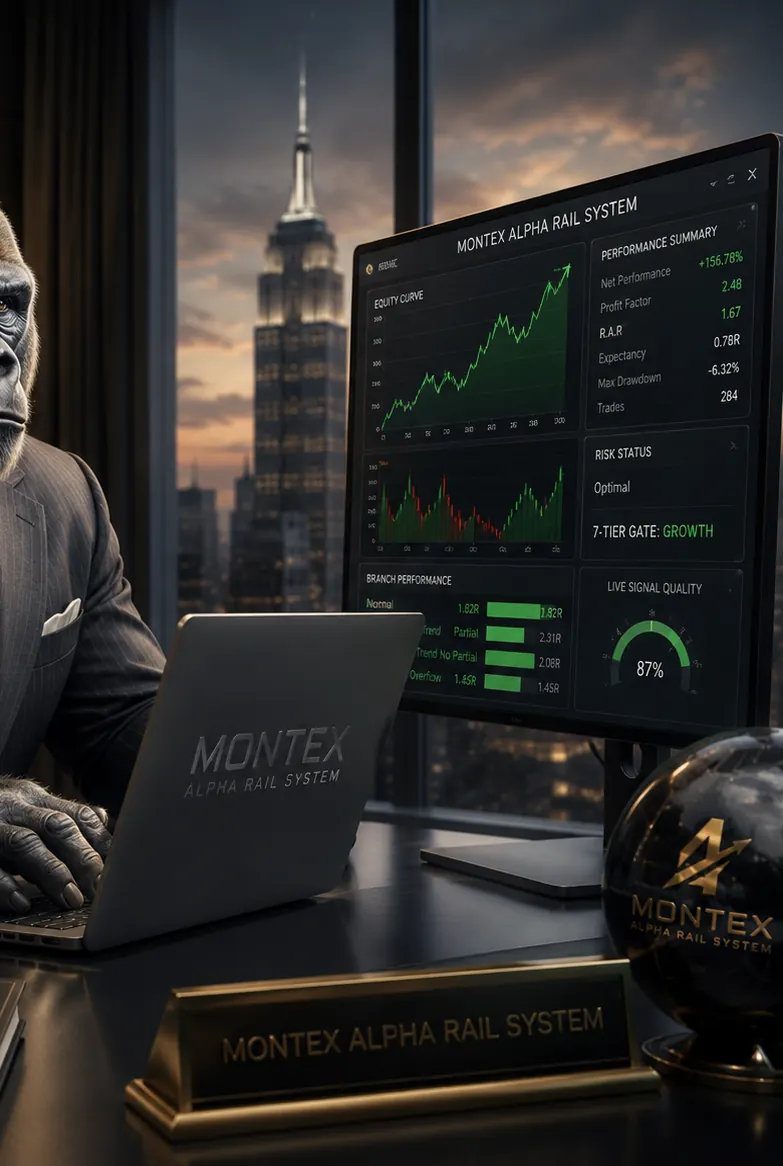
What an animal claims instead

A temperament, which is a claim about conduct rather than results.

A living creature depicts a way of behaving. It says the operator is composed, deliberate, unhurried — all of which are things the product genuinely does influence, since conduct is precisely what a governance layer acts on. That makes the identity honest in a specific technical sense: it promises something the system can actually deliver, and it stays true regardless of what any account does in any quarter. An outcome image is falsified by a bad year. A temperament image is not, because it was never describing the year.

The trade being made

It is a weaker sell, and it survives contact with a drawdown.

This is not a costless choice. Outcome imagery works — a rising line communicates instantly and appeals directly to why someone is shopping, and a calm animal communicates something slower that has to be explained. The compensating property is durability. A brand whose central image is a promise is at odds with its own customers during every bad stretch, which in this discipline is a substantial fraction of the time. One that promises composure is saying the same thing in the good months and the bad ones, and it is in the bad ones that the operator is deciding whether to keep the system.

  • Outcome imagery converts faster and ages badly.
  • The brand has to still be saying something true in a losing quarter.
  • Consistency across conditions is worth more than immediacy at the door.

Where the numbers are allowed to be

Charts appear where they can carry their conditions with them.

Nothing here forbids visualisation, and the product is full of it. The distinction is context: a chart inside a panel arrives attached to its inputs, its period, its assumptions and its caveats, and can be interrogated. A chart in a logo has no such attachments and never will — it is a single image doing duty everywhere, unqualified by construction. That is why quantitative material belongs on the instrument surfaces and the identity holds a temperament instead.

The key idea

An identity is the one claim that appears everywhere and is never qualified.

A logo turns up on every page, in every context, with no room for a footnote. Whatever it asserts is therefore asserted unconditionally, which is a high standard and a good reason to put nothing there that could be shown to be false. A picture of an outcome cannot meet that standard in a discipline governed by variance. A picture of how one intends to behave can, and it is the only kind of promise a system like this is in a position to make.

Connected inside MARS

Every brief documents the same shipped system.

The complete MARS package — eleven workbooks, three TradingView indicators, the full manual library — $497.